
Introduction
When it comes to buying a home, understanding why credit scores matter can be the key to unlocking better loan options and lower interest rates.
Your credit score can make or break your home buying journey. Impacting everything from loan approval to interest rates and the type of mortgage you qualify for.
At The Palms Realty, we’ve helped hundreds of clients navigate mortgage approvals with trusted local lenders. If you’re wondering how to get pre-qualified, we can connect you with the right experts today.
👉 Reach out now to schedule your free consultation.
1 Why Do Credit Scores Matter in Home Buying?
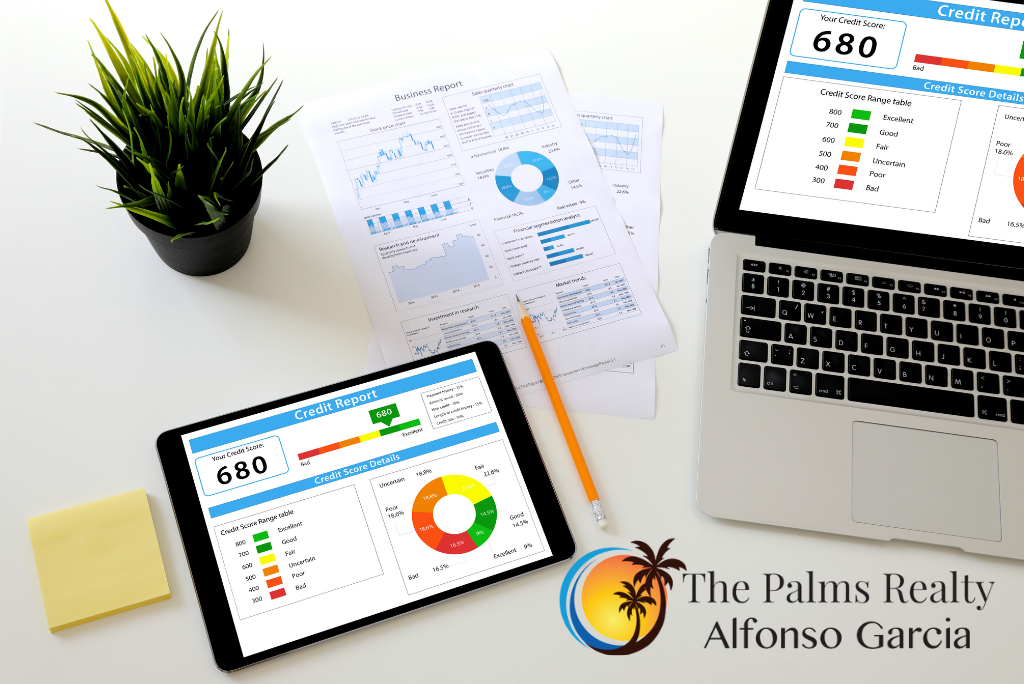 Your credit score is a lender’s risk meter. When you apply for a mortgage, lenders look at this 3-digit number to assess:
- Your ability to repay a loan
- Your payment history and debt habits
- How much house you can afford
- What loan products you qualify for (FHA, VA, USDA, or Conventional)
- Your mortgage interest rate and monthly payment
Example: Credit Score vs Interest Rate
| Credit Score | Est. Interest Rate | $300,000 Mortgage (30 Years) |
|---|---|---|
| 760+ | 6.00% | $1,798/mo |
| 620 | 7.25% | $2,048/mo |
| 580 | 8.00% | $2,201/mo |
Just a 1% change in rate due to your score can cost you $200+ per month and $70,000+ over the life of your loan.
2 Why Does a Credit Score Matter at All?
Your FICO score (or sometimes VantageScore) is a trusted way to evaluate your financial reliability. It reflects:
- How responsibly you use credit
- If you pay on time
- How much of your credit you’re using
- The length of your credit history
- Types of credit and recent inquiries
Beyond mortgages, your credit score can affect:
- Car loans
- Credit card approvals
- Insurance premiums
- Apartment rentals
- Utility deposits
3 How Often Do Credit Scores Update?
Your credit score isn’t updated in real time. It typically updates every 30 to 45 days, based on when creditors report to the three major bureaus:
- Equifax
- Experian
- TransUnion
Each lender has a unique reporting schedule. That means your score might change at different times across different platforms.
4 Do Credit Scores Fluctuate Daily?
Yes, your score can shift slightly even week to week due to:
- Changes in balances
- New credit card use
- Soft or hard credit pulls
- Payments posted to accounts
Unless there’s a major event (like missing a payment,
5 How Often Do Credit Scores Go Up?
 You may see a credit score increase within 30–90 days by:
-
- Paying down balances (especially revolving credit)
-
- Avoiding late payments
-
- Paying off high-interest credit cards
-
- Reducing credit utilization below 30%
You may see a credit score increase within 30–90 days by:
-
- Paying down balances (especially revolving credit)
-
- Avoiding late payments
-
- Paying off high-interest credit cards
-
- Reducing credit utilization below 30%
Big improvements take time. Scores increase more significantly over 6–12 months of consistent, responsible financial behavior.
6 How Many Credit Scores Does a Person Have?
Surprisingly, you don’t have just one credit score. You may have:
- FICO Score 8 – used by credit card companies
- FICO Score 2, 4, 5 – used by mortgage lenders
- VantageScore – used by some online services
Each credit bureau calculates scores using slightly different formulas, so:
- Your score at Experian may differ from TransUnion or Equifax
- Lenders often use a tri-merge report (all 3 bureaus)
- The middle score is usually the one that counts
7 Do Credit Scores Matter in Other Countries?
If you’re an international buyer relocating to the U.S., you might ask: “Do credit scores matter globally?”
- The U.S. uses a unique FICO system
- Most countries rely on credit reports, not scores
- International buyers often need:
- A U.S. co-signer
- A domestic credit account
- To establish credit from scratch
If you’re new to the U.S. and buying in Las Cruces or Santa Teresa, contact The Palms Realty. We can help you connect with credit-friendly lenders.
8 What’s a Good Credit Score to Buy a Home?
 Here’s a quick breakdown of minimum credit score requirements:
- 580+ → Possible FHA loan with 3.5% down
- 620+ → Common minimum for conventional loans
- 680–739 → Better rates and terms
- 740+ → Best possible interest rates
Loan Program Score Requirements
| Loan Type | Minimum Score | Notes |
|---|---|---|
| FHA | 580 | 3.5% down, more lenient debt ratios |
| VA | 620 | No down payment, for veterans |
| USDA | 640 | For rural areas like southern New Mexico |
| Conventional | 620+ | 5–20% down |
9 Can I Still Buy a Home with Bad Credit?
Absolutely, but you’ll need a strategy. Buying with a low score might require:
-
- A larger down payment
-
- Using FHA or non-QM loans
-
- Getting a co-signer
-
- Participating in credit repair or counseling
We always recommend creating a custom credit action plan with a lender. Our network of partners at The Palms Realty can help.
10 Tips to Improve Your Credit Before Buying a Home
If you’re thinking of buying in the next 6–12 months, here’s what to do now:
- Pay every bill on time
- Keep your credit card balances under 30%
- Don’t open or close credit accounts
- Dispute any errors on your credit report
- Avoid hard inquiries before applying for a loan
Ask us for a free referral to a lender who can help you build a personalized credit improvement plan before you apply.
11 Conclusion
Your credit score isn’t just a number–it’s a powerful tool that can shape your entire home buying experience. From unlocking better mortgage rates to determining what loan programs you’re eligible for, knowing why credit scores matter in home buying gives you a major advantage.
Whether you’re planning to buy in Las Cruces, Santa Teresa, or anywhere in between, now is the time to take action. Review your credit, make smart financial moves, and surround yourself with trusted professionals who can guide you every step of the way.
12 How often do credit scores update?
Every 30–45 days, based on lender reporting.
13 Do credit scores go up weekly or monthly?
Scores can rise monthly if you’re reducing balances and making timely payments.
14 How does credit score affect mortgage rates?
Higher scores = better rates. Lower scores = higher monthly payments.
15 Can you get a home loan with a 580 score?
Yes, with FHA loans and higher down payments.
16 Do credit scores exist outside the U.S.?
Other countries use credit systems, but not the FICO model.
17 How do I check my credit before house hunting?
Use free tools like AnnualCreditReport.com or speak to a mortgage lender.

Let’s Take the Guesswork Out of Buying
🎯 Wondering where your credit stands?
🎯 Unsure if you qualify for a loan?
Let’s make it simple.
👉 Contact The Palms Realty today to get connected with our trusted mortgage partners.
We’ll help you check your credit, get pre-qualified, and start the journey toward owning a home in Las Cruces or Santa Teresa, New Mexico.
📞 Call us today at (575) 621-5780 or simply fill out the form below. Your next home starts here!